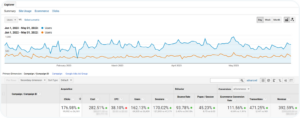
Audit & measurement check
Confirm GA4 tracking, conversion integrity, Merchant Center diagnostics, and baseline KPIs.


CLIENT NIASHA is an online cosmetics store in Switzerland specializing in Korean brands. More than 70 product brands are represented […]


Write 2–4 paragraphs in normal “blog” tone:
who the client is, what they sell, and what “growth” means for them.
Mention market specifics (languages, competition, seasonality) and
constraints.

Beauty

PPC Management Services
Search Engine Optimization
SimilarWeb

Google Analytics
Google Trends

Google Market Explorer
ScreamingFrog
Meta Audience Insights
Google Tag Manager
Meta
Google Search Console
Promodo DevTools
Ahrefs
Semrush
Linkedin Ads Library
+
392
%
+
28
%
+
471
%
Explain the bottleneck in one sentence, then add context. Avoid generic “increase sales”. Add real constraints: approvals, tracking, coverage gaps, margin sensitivity, limited budgets, etc.
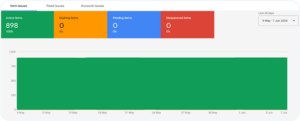
This is the main section. Use short subheadings + paragraphs. Keep it readable, no “boxed” text blocks.
Describe exact actions: policy/data fixes, feed rules, supplemental feeds, GTIN/brand consistency, image issues. Group by themes instead of listing 20 separate bullets.
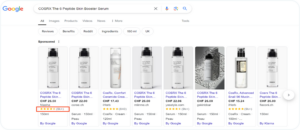
Explain the idea in plain terms: separate fast-selling products from slow movers to keep ROAS stable and scale winners. Mention how budgets/bidding differ per segment.
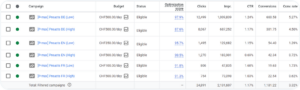
Explain: brand + category Search helps capture ready-to-buy demand, supports PMax, and improves control.
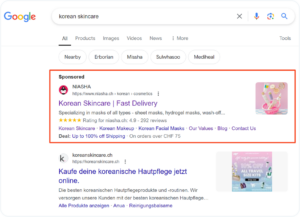
Keep it short: what you implemented and what it improved (CTR, trust, differentiation).
Describe your process in 2–3 sentences, then list the steps below. Keep it simple and data-driven.
Confirm GA4 tracking, conversion integrity, Merchant Center diagnostics, and baseline KPIs.
Reduce rejections, improve product data, set a monitoring routine to keep approvals stable.
Separate budgets & targets to scale winners while protecting profitability.
Launch brand/category Search in EN/DE/FR/IT and iterate weekly based on data.
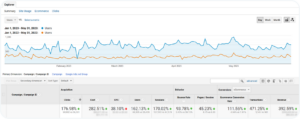
Add 1–2 paragraphs describing “what changed” in business terms: more eligible products, stable scaling, improved efficiency, and how ROAS behaved during growth. Mention the exact period.